All About Drivers
Printer Connection Guide

Understand printer offline and driver missing messages.

A simple educational visual guide explaining printer offline status, driver unavailable messages, print queue behavior, USB detection, Wi-Fi printer search, and printer communication flow.

Educational guide Visual learning Official references No repair service

What users usually see

Match the screen with the printer situation.

These examples explain common printer screens in a learning context, so readers can understand what the message usually points to before reading the detailed guide.

Printer Offline
Screen example 01

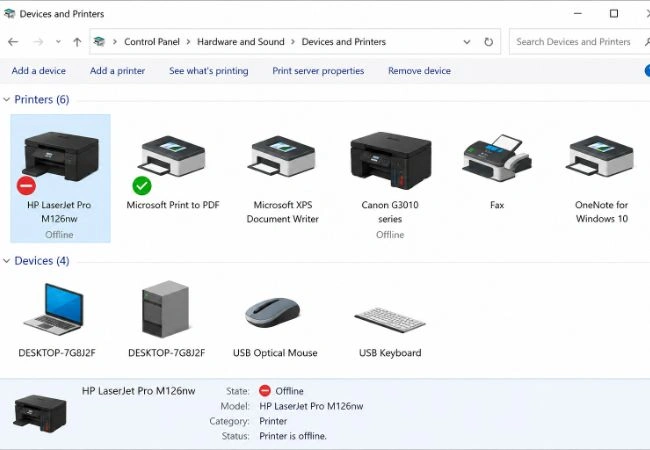
Printer Offline

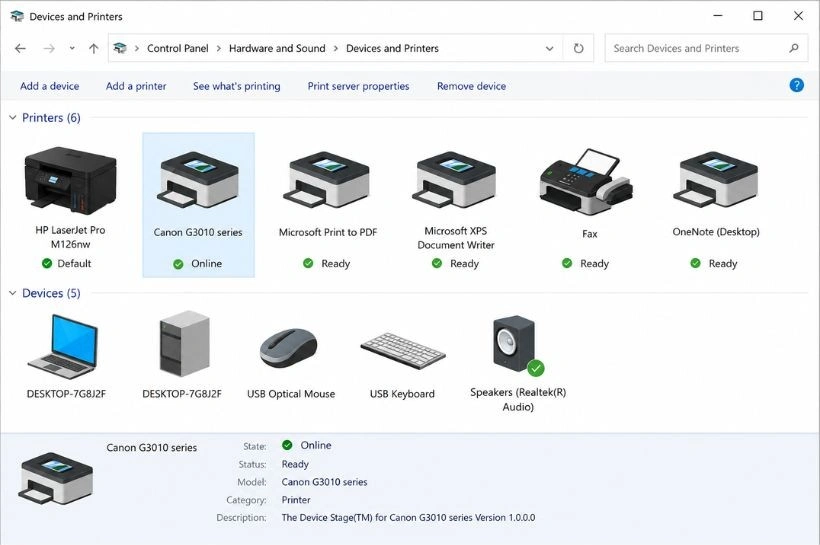
The printer appears in Devices & Printers, but the status says Offline. This usually means the computer can see the printer record, but the current communication path is not active.

Printer visible Offline status Connection path inactive
Driver Missing
Screen example 02

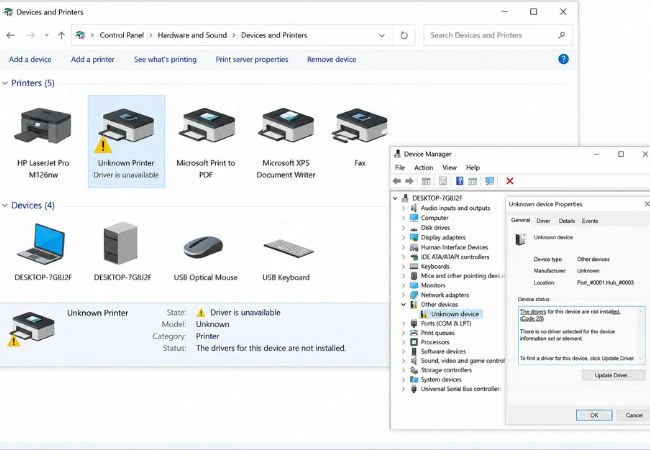
Driver Missing

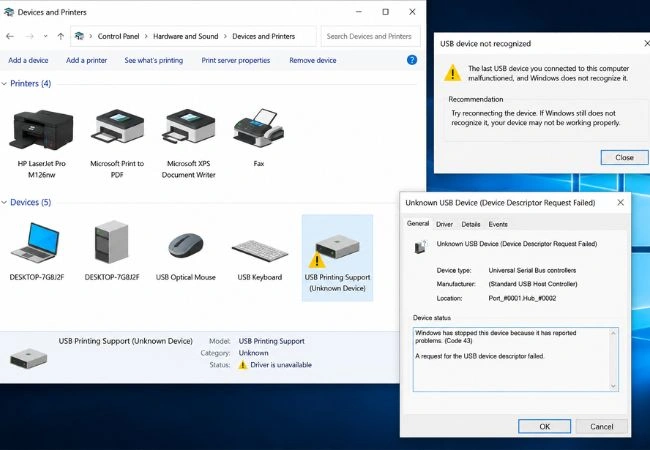
The computer may show driver unavailable, unknown device, or a warning symbol. This means the system does not have the right software layer to communicate with the printer properly.

Driver unavailable Unknown device Warning symbol
USB Not Recognized
Screen example 03

USB Not Recognized

A USB printer may be connected, but the computer may not detect it correctly. This can relate to cable connection, USB port behavior, or device recognition.

USB cable Port detection Device recognition
Print Queue Stuck
Screen example 04

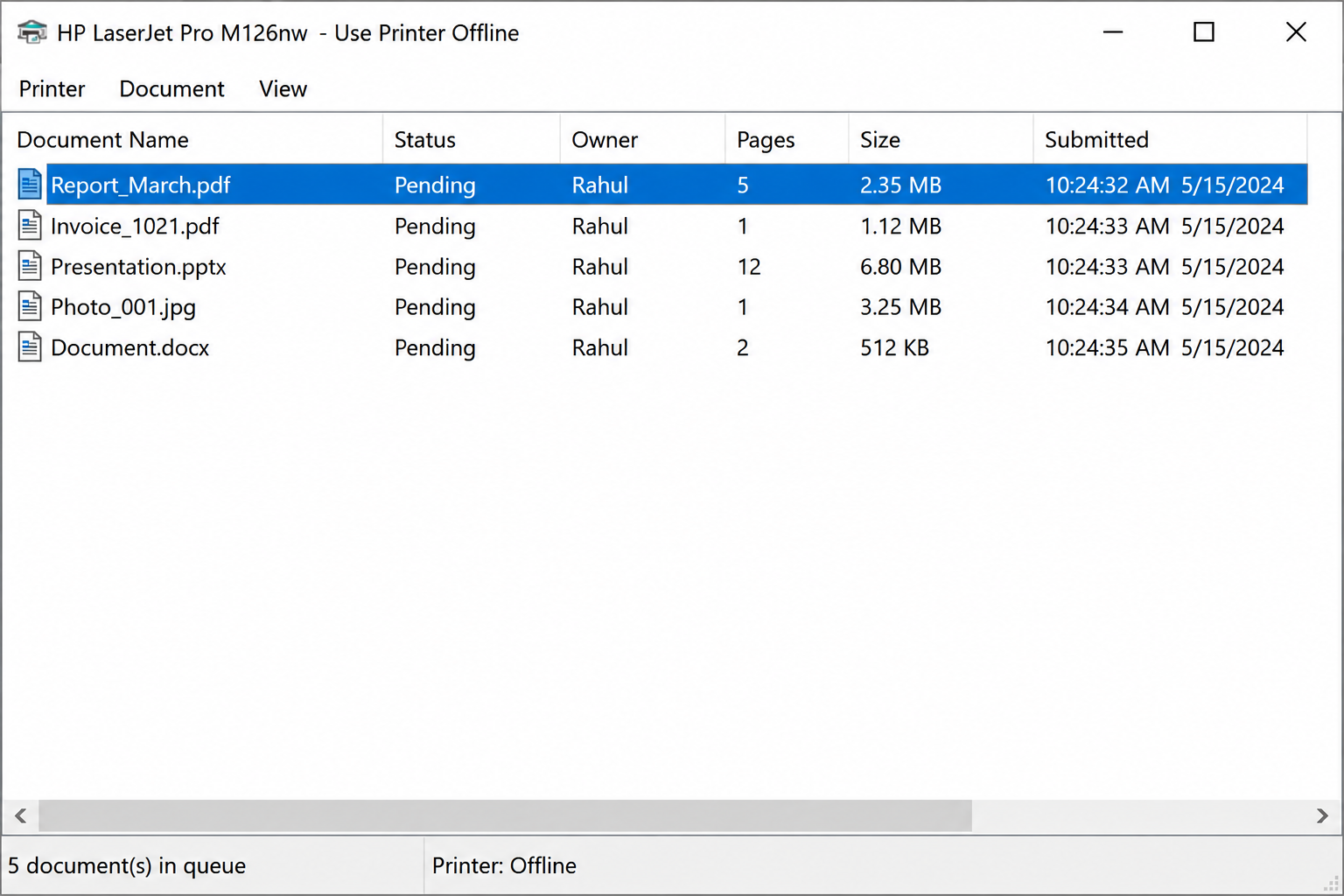
Print Queue Stuck

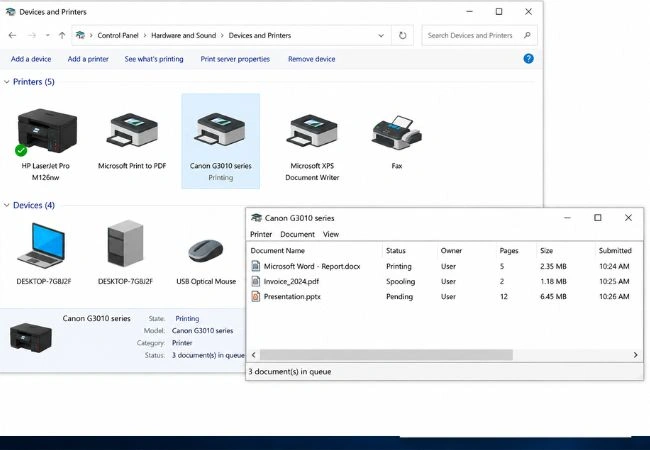
Old documents may remain pending and block new print jobs. The print queue shows the order of print requests and whether any job is paused, stuck, or waiting.

Pending jobs Paused queue Blocked print request
WiFi Printer Not Found
Screen example 05

WiFi Printer Not Found

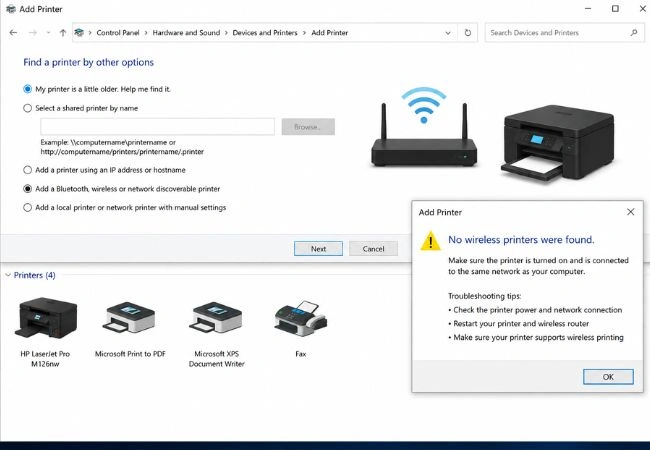
A wireless printer may be powered on but not appear during search. This usually relates to network visibility, same Wi-Fi connection, or printer discovery behavior.

Same network Printer discovery Wireless visibility
Add Printer Not Showing
Screen example 06

Add Printer Not Showing

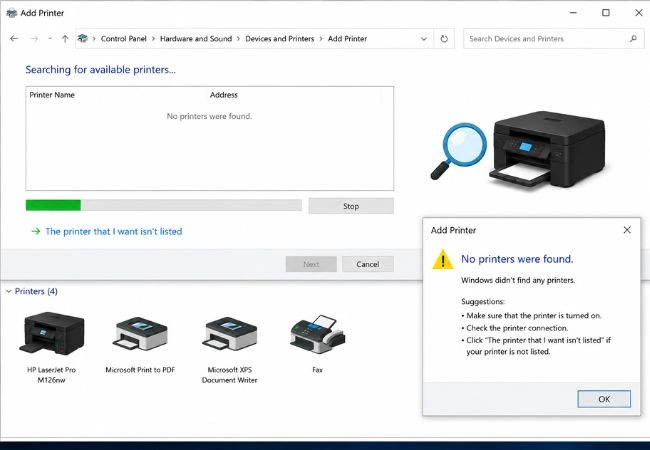
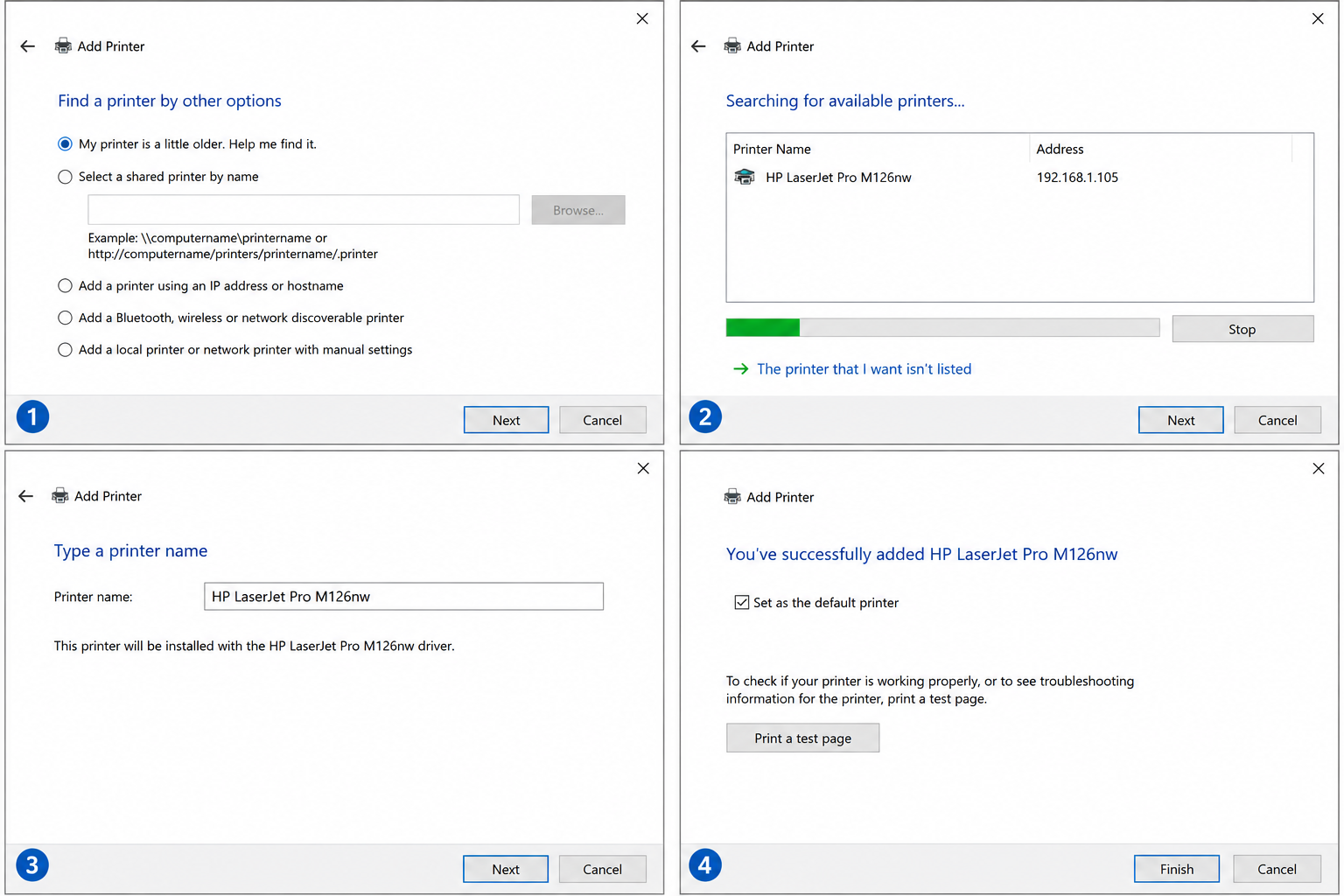
The Add Printer screen may not show the model immediately. The system usually searches available USB, network, or wireless printer paths before listing a device.

Add printer screen Device search Printer not listed

Control panel style guide

Where users usually check printer status.

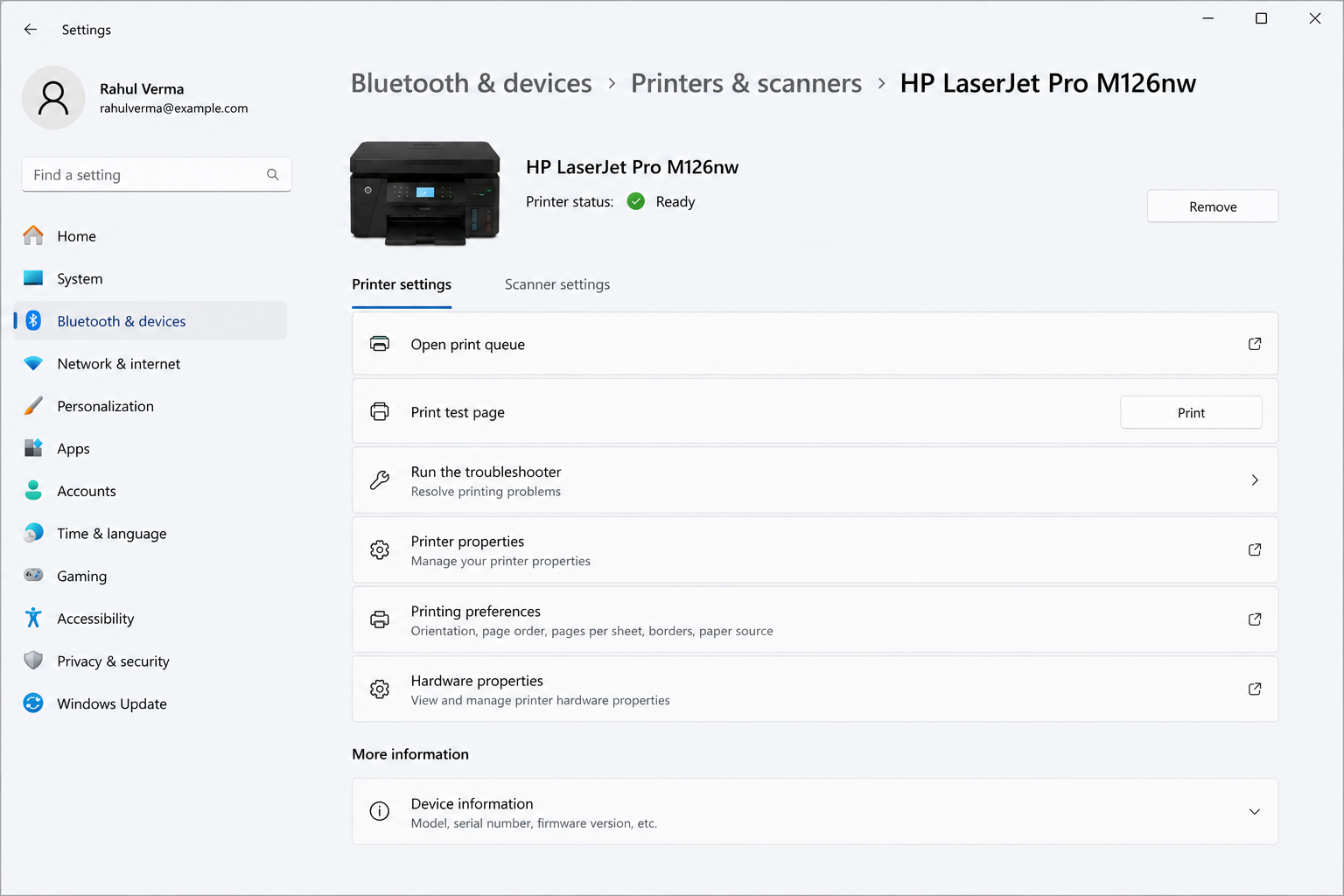
Printer settings, Devices & Printers, print queue, and Device Manager are common areas where printer status and driver information appear.

Devices & Printers

Shows connected printers and their basic status.

Print Queue

Shows pending, paused, or failed print requests.

Device Manager

Shows unknown device or missing driver warnings.

Control panel printer status example

Printer learning basics

How printers communicate with computers.

Before understanding offline messages, driver warnings, or print queue issues, it helps to understand the normal printer communication path. A printer usually needs a connection path, a driver, and an active print queue before documents can move from the computer to the printer.

Connection path

USB, Wi-Fi, or network path lets the computer find the printer.

Driver layer

The driver helps the operating system talk to the printer.

Print queue

Print jobs wait in order before the printer processes them.

Common signs users may notice

These signs usually appear before users check printer settings.

Offline status

Printer appears in the list but shows offline or unavailable.

Driver warning

Driver unavailable, unknown device, or warning symbol appears.

Queue stuck

Documents remain pending and new print jobs do not continue.

Network search

Wireless printer does not appear during printer search.

Driver installation flow

How printer driver setup usually works.

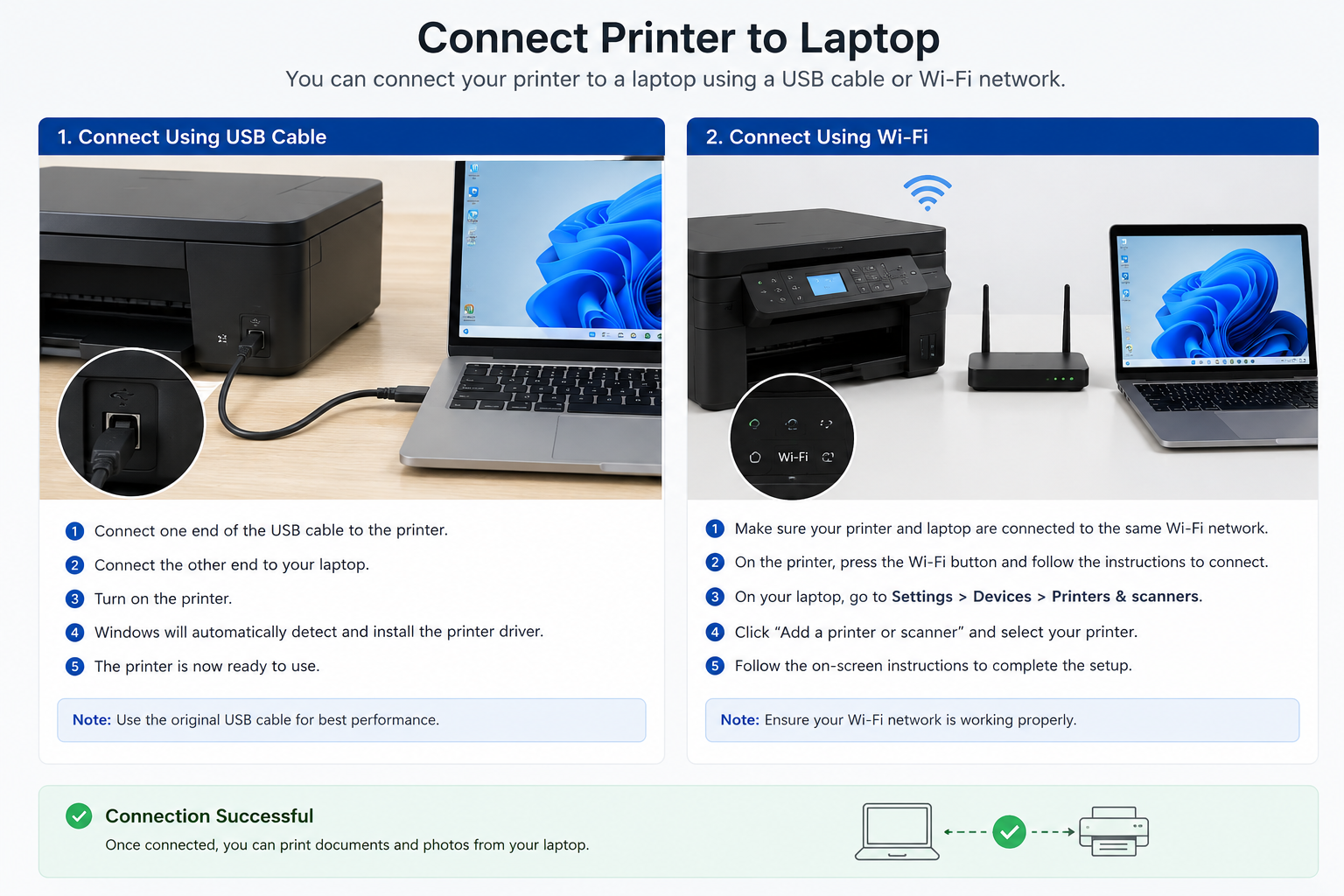
These steps explain the normal learning flow: connection, settings, driver communication, print queue, and test page.

Connect Printer
Step 01

Connect Printer

Plug USB cable or connect printer to WiFi network.

Open Printer Settings
Step 02

Open Printer Settings

Go to printer settings or Devices & Printers area.

Add Printer
Step 03

Add Printer

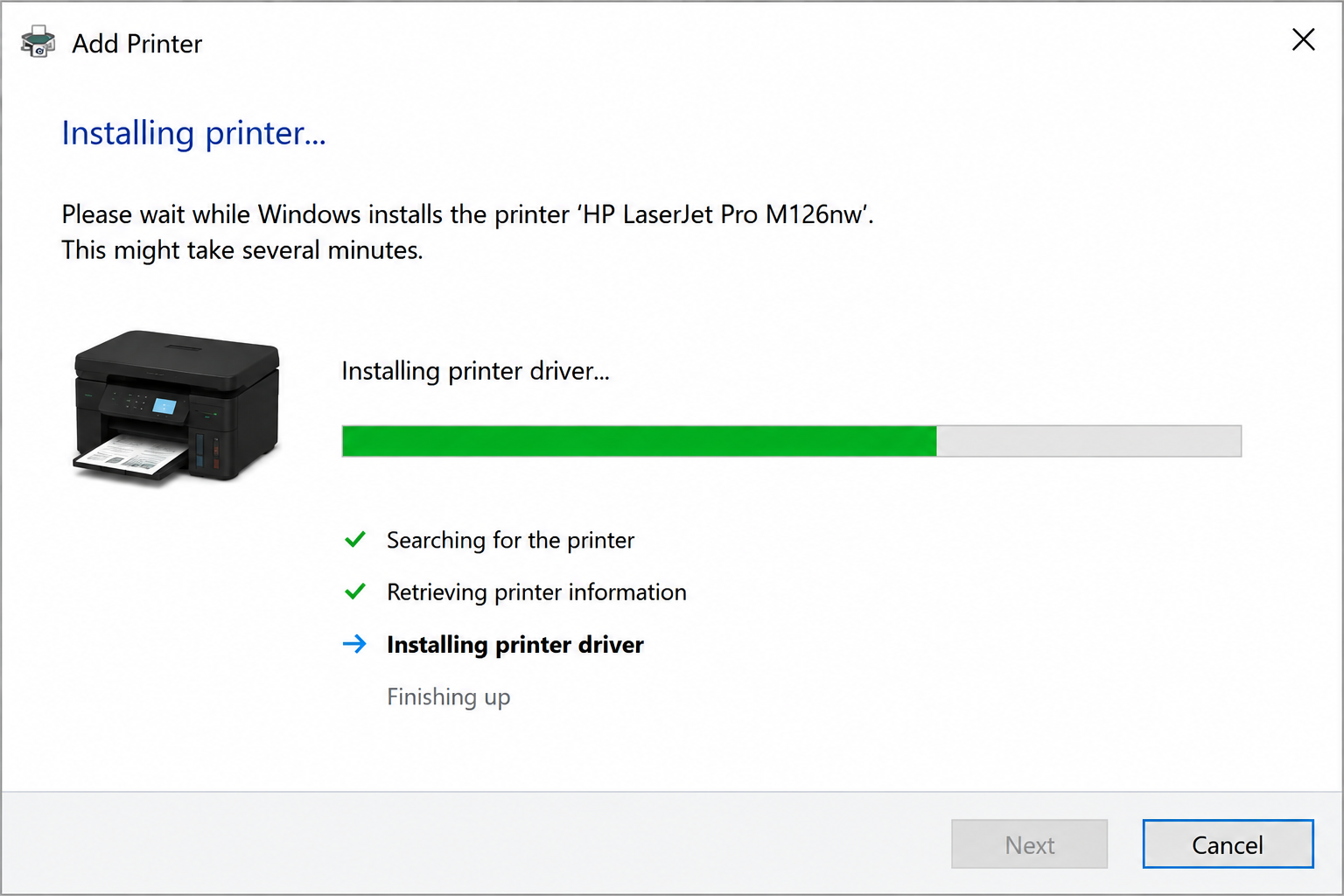
Choose Add Printer and let computer search for available printer.

Install Driver
Step 04

Install Driver

System uses a driver so printer and computer can communicate.

Check Print Queue
Step 05

Check Print Queue

Clear old jobs if print requests are stuck.

Print Test Page
Step 06

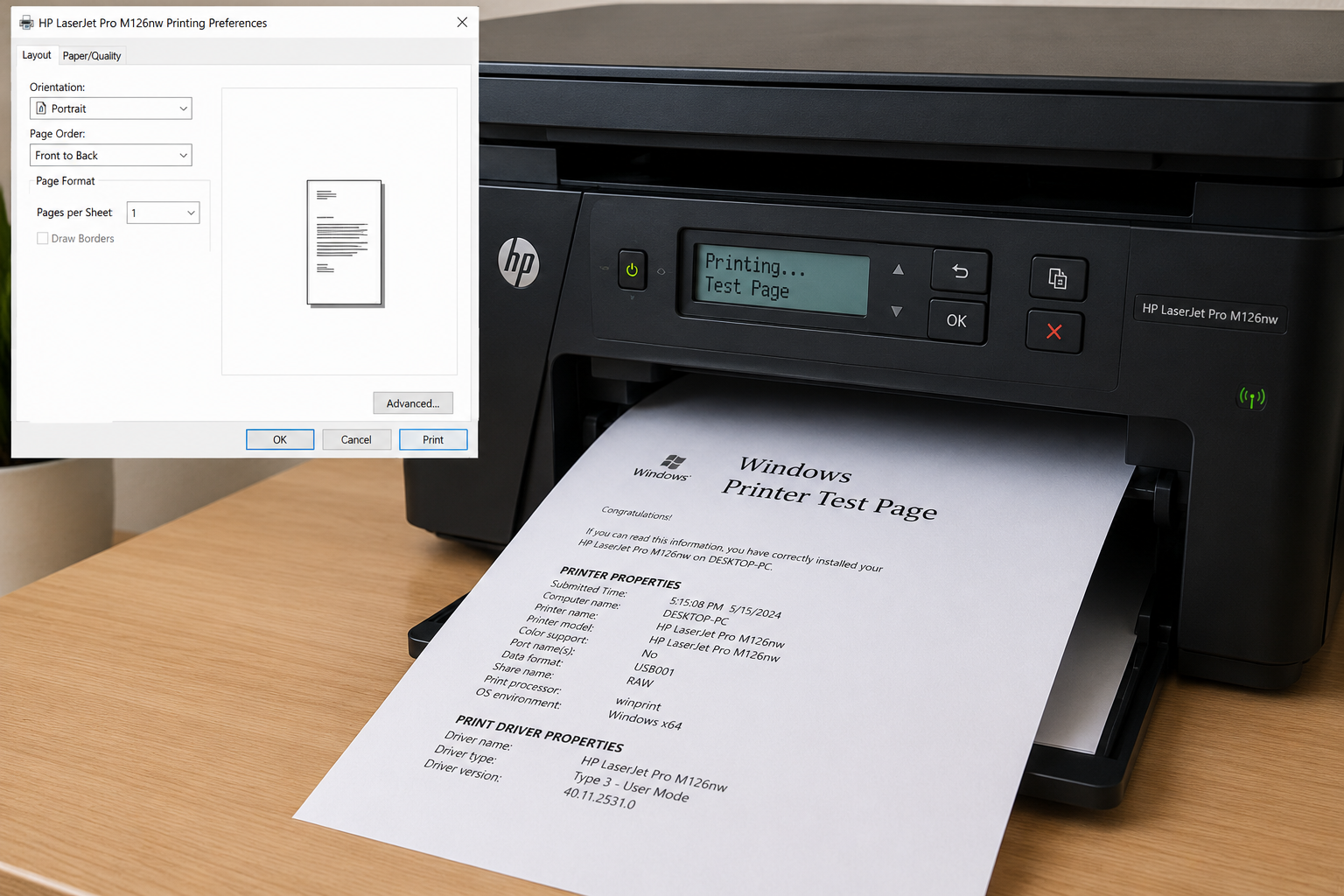
Print Test Page

Send a test page to confirm the printer path works.

What a driver does

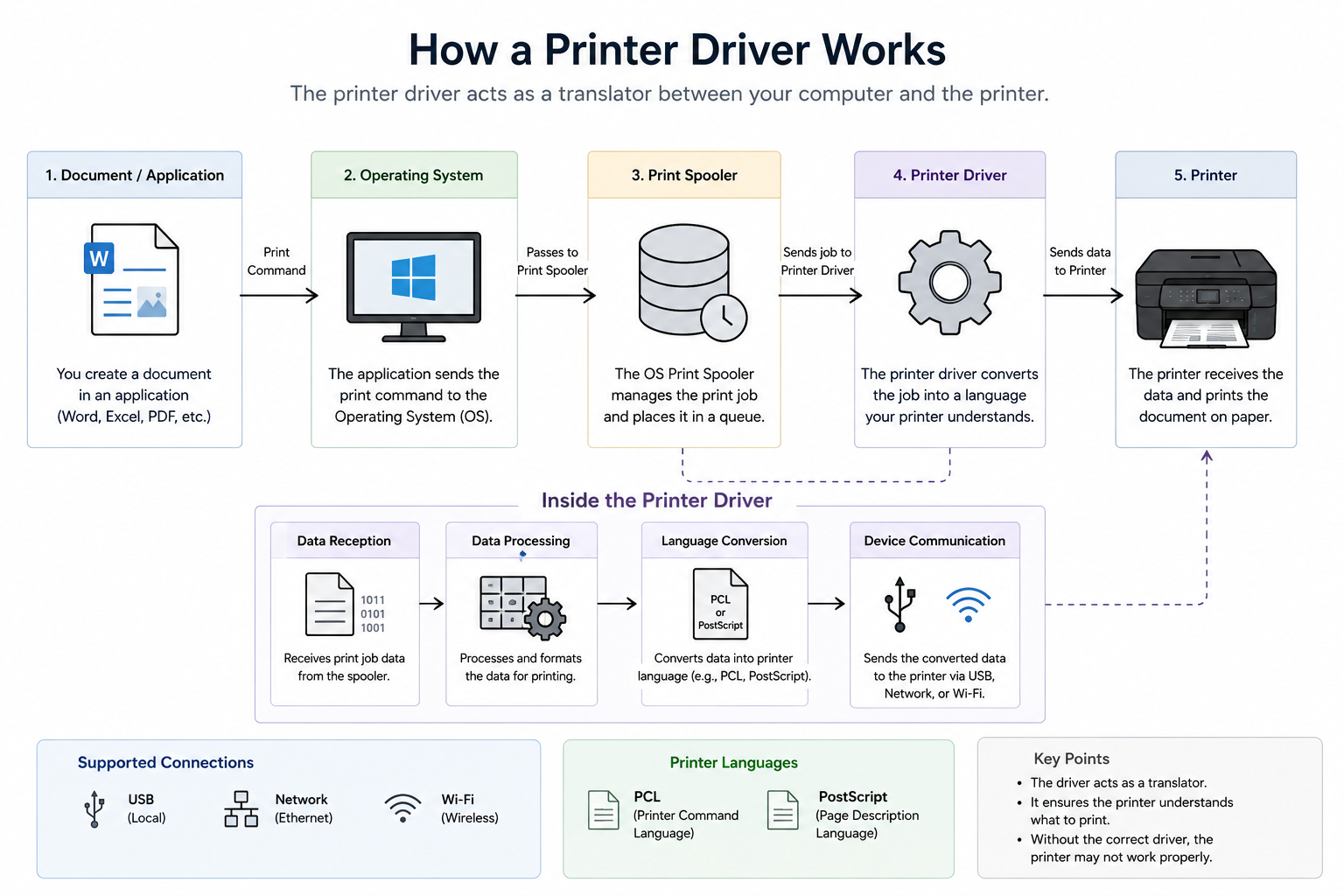
A driver is the translator between computer and printer.

When you click print, the document does not directly go to the printer. The driver helps convert the document into instructions the printer understands.

Printer driver architecture flow

Printer driver facts

Simple concepts behind printer communication.

These notes explain why a printer may need a driver, why queues exist, and why connection methods can affect printer visibility.

FACT 01

Drivers help communication

Drivers allow operating systems and printer hardware to exchange instructions.

FACT 02

Printers use queues

Print requests are normally stored in a queue before they are processed.

FACT 03

Connection methods differ

Printers may communicate through USB, Ethernet, or Wi-Fi connections.

Quick checklist

Check these things in this order.

This checklist is for learning and awareness only. It helps readers understand the common order in which printer connection topics are usually reviewed.

01

Is the printer turned on?

Power light, display, and printer ready state.

02

Is the cable or WiFi working?

Reconnect USB cable or check same WiFi network.

03

Is the printer visible?

Check printer list in settings or Control Panel.

04

Is driver installed?

Driver missing can show printer unavailable.

05

Is print queue clear?

Old stuck jobs can block new print requests.

06

Can it print a test page?

Test page confirms basic communication path.

Related learning topics

Continue with nearby driver concepts.

Official reading sources

Printer information should be checked from official documentation.

This page is written as an educational guide. Printer screens, driver messages, and setup options may vary by Windows version and printer model, so readers should compare general learning content with official documentation.

Status meanings

Offline, paused, unavailable, and driver missing are different messages.

A printer screen may show several different status words. Each word points to a different part of the printer communication path.

Printer Offline
The computer cannot currently communicate with the printer through the expected USB, Wi-Fi, Ethernet, or network path.
Paused Queue
The print queue may not be sending documents forward, even if the printer itself is visible.
Driver Unavailable
Windows may not have the required software layer to understand that printer model or its features.
Printer Not Listed
The printer may not be discoverable through the current cable, wireless network, or device search path.

Detailed explanation

Why printer connection messages appear.

A printer does not work as a single isolated device when it is used from a computer. It depends on a chain of communication. The computer prepares the document, the printer driver converts the document into printer instructions, the print queue organizes the job, and the connection path sends the job to the printer.

When a printer appears offline, the computer is usually reporting that one part of this chain is not responding clearly. The printer may still be powered on, but Windows may not be able to confirm its ready state through the saved printer profile.

Driver missing messages are different from offline status. A driver message usually means Windows does not currently have the correct software layer for that printer. Without the driver layer, the system may not understand paper sizes, color settings, print quality options, scanner features, or layout commands.

Print queue messages are also important. A queue stores print jobs before they reach the printer. If an older job remains pending, paused, or blocked, later documents may wait behind it. This can make users think the printer is not responding even when the issue is related to queue behavior.

Wireless printers add another layer because they depend on router visibility and local network discovery. A printer and computer may both be connected to Wi-Fi, but if they are on different networks or the printer cannot be discovered, the printer may not appear during search.

Common questions

Printer connection FAQs.

01 What does printer offline usually mean? +

It usually means the computer cannot currently communicate with the printer through the expected connection path.

02 Does offline mean the printer is broken? +

No. Offline status is a communication message and does not automatically mean the printer hardware is damaged.

03 What is a printer driver? +

A printer driver is software that helps the operating system communicate with printer features and commands.

04 What does driver unavailable mean? +

It usually means Windows does not currently have the needed driver layer for that printer model.

05 Why does the print queue matter? +

The queue stores print jobs. If one job remains pending or paused, later jobs may wait behind it.

06 Can Wi-Fi affect printer discovery? +

Yes. Wireless printers depend on router visibility, same-network communication, and local device discovery.

07 Why does USB printer not appear? +

USB detection can depend on cable condition, port behavior, device recognition, and driver availability.

08 Is this page technical support? +

No. This page is educational reading only. It does not provide phone support, remote access, repair, installation, or paid troubleshooting.

Educational note

This page is for learning printer connection concepts.

All About Drivers provides educational reading only. This page does not offer live support, phone support, remote access, repair service, driver installation service, or paid troubleshooting.

No phone support No remote access No software sales Official sources linked

Continue learning

Learn more driver concepts.

Explore related educational guides about audio, graphics, network, USB, chipset, Bluetooth, and other driver topics.